
The importance of avidity in detection of CAR cells.
The continued evolution and success of Chimeric Antigen Receptor (CAR) T cell therapies depend on precise cell engineering with rigorous quality control measures. Guidelines in the 2024 U.S. Food and Drug Administration (FDA) publication, "Considerations for the Development of Chimeric Antigen Receptor (CAR) T Cell Products¹”, play a pivotal role in defining these measures and serve as an indispensable resource for developers navigating the path from foundational research to clinical application and subsequent commercialization. The document provides updated recommendations spanning Chemistry, Manufacturing, and Control (CMC), pharmacology, toxicology, and the design of clinical studies for hematologic malignancies and solid tumors.¹
The guidelines emphasize the crucial need for robust analytical and monitoring strategies, where advanced tools are indispensable. Building on Dextramer® technology, our multimer reagents are smart solutions to meet stringent regulatory requirements, particularly for CAR detection and T cell monitoring. To help you plan your regulatory strategy, we’ve broken down the FDA Guidelines into actionable pillars where our products and services make a difference.
Key Regulatory Requirement |
Immudex Solution |
Benefit of Compliance |
|
Robust quality control of starting material and final product. "Control of the manufacturing process and appropriate in process and lot release testing are crucial to ensure CAR-T cell safety, quality, and lot-to-lot consistency." "Direct detection of the CAR to determine the percentage of CAR-positive cells." "If pretreated with another CAR-therapy, evaluation of the previously administered CAR T cell levels in the cellular starting material may be appropriate." |
CAR Dextramer® |
|
|
Confirmation of CAR binding specificity. "Assess the ability of each antigen recognition domain to specifically bind to its target." |
CAR Dextramer® |
|
|
Comprehensive characterization of transduced T cells. "The nature of the transduced T cells expressing the CAR can also influence the biological activity of the final investigational product. […] Evaluation may include examination of uncontrolled proliferation, in vitro and in vivo testing for T cell clonality, karyotypic analysis, TCR repertoire analysis, and specificity for viral antigens through ex vivo stimulation and recognition assays.” |
MHC I/II Dextramer® dCODE Dextramer® Xynapse™-T |
Evaluate the impact of genetic modifications on the natural function of T cells.
|
|
Identification and mitigation of on-target/off-tumor and off-target toxicities. "Undesired targeting of healthy/normal tissues (on-target/off-tumor) – for example, tissue cross-reactivity studies..." |
Custom Dextramer® reagents |
|
Input material and the complex, multi-step procedures of CAR-T cell manufacturing are potential sources of variability that impact achieving product quality criteria and dose targets. That variability and any delays in the vein-to-vein journey can compromise the product's viability and overall effectiveness. Thus, stringent quality control, from starting material through formulation, must detect any quality deviations.
A situation that will become more prevalent over the next years is that patients who qualify for a CAR-T cell therapy may have previously received a CAR-based treatment. Residual CAR-T cells could influence expansion and transduction rates during manufacturing, as well as alter characteristics of the final product, such as potency, safety, and persistence.
Understanding these effects can, on the one hand, help to ensure that the final product derived from pre-treated patients is comparable in critical quality attributes to that from naive patients. On the other hand, insights can inform patient stratification and dose regimes.
The key to teasing apart the effects of residual CAR-T cells is the ability to detect, isolate, and interrogate them specifically and sensitively. Our multimer reagents are exceptionally well-suited for that purpose. The high avidity and epitope specificity of Dextramer® technology enables the distinction in a single sample of cells expressing one CAR from those expressing another, which presents an advantage for patient monitoring after second-line treatment.
Direct CAR detection forgoes correlative surrogate measures of CAR expression and uses well-established flow cytometric technologies to verify the identity of the transduced CAR and accurately quantify its presence. A variety of detection reagents are used for this purpose.
Among them, CAR Dextramer® reagents stand out because they leverage the antigen-specificity of the CAR and boost avidity by presenting multiple copies of that antigen. By binding CAR constructs in the same manner as the intended therapeutic mechanism, CAR Dextramer® reagents confirm that the correct construct has been transduced and that it binds the target antigen. Plus, their exceptional sensitivity becomes particularly notable when target cells are rare or when CAR constructs have low affinity or low expression.
Another advantage of CAR Dextramer® reagents is that they are available for a broad range of targets, allowing developers to explore new construct-target combinations.
Cui and colleagues, for example, developed and characterized Treg cells engineered to express a CAR targeting the IL23 receptor (IL23R), which is upregulated in intestinal cells of active Crohn’s disease. They used a customized Dextramer® hIL23R reagent to quantify Treg cells transduced with a fully functional CAR, the same CAR lacking the signaling domain, and the CAR equipped with a GFP reporter. They demonstrated transduction efficiency for these three construct versions of 40 to 65%.²
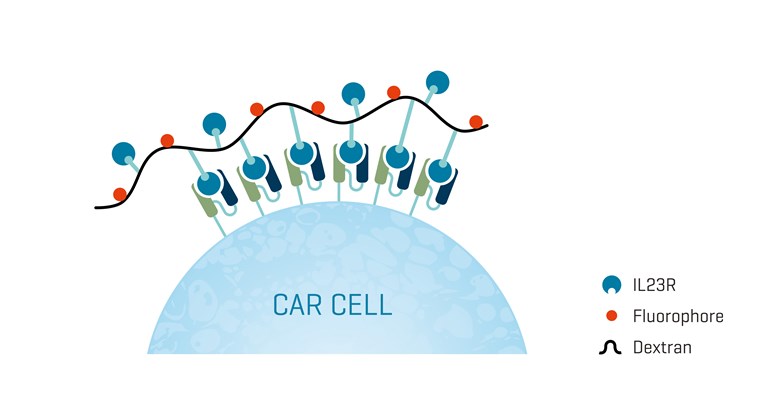
Figure 1. Customized Dextramer® hIL23R reagent used by Cui et al.² for detection of CAR Treg cells.
The FDA recommends that assay development commence early in the product lifecycle, employing a diverse array of assays to thoroughly characterize the CAR T-cell product. When the product advances to pivotal trials and commercial applications, those analytical procedures will need to undergo thorough qualification and validation in accordance with established guidelines.
Thus, your choice of detection reagent is key. With the variability inherent in the manufacturing of CAR-T cells, tools employed to measure and control variability in processes or products must possess exceptional consistency and reliability. Having the foresight to select such high-quality reagents for the research stage can facilitate the transfer of analytical assays to clinical stages.
Dextramer® reagents are known for their quality and reliability. The quality standards governing our reagent production include multiple in-process quality checks. Furthermore, Immudex has the know-how and capacity for GMP-grade manufacturing, so you can deploy the same reagents for both development and clinical manufacturing.
Thoroughly characterizing transduced T cells is an essential aspect of cell therapy development that the FDA guidelines underscore. The outcomes of such analyses clarify questions about the persistence and exhaustion potential of CAR-T cells and may also provide early indications of any long-term safety risks.
Comprehensively documenting the biological activity of transduced T cells involves in-depth analyses to profile safety-relevant behavior. The molecular architecture of Dextramer® reagents accommodates a DNA barcode (dCODE® technology) to discriminate different population subsets and even individual cells. Coupled with Next-Generation Sequencing, dCODE Dextramer® reagents enable single-cell multi-omic analyses. Thus, developers can immunophenotype cell subpopulations, characterize T cell clonality, examine their gene expression, and track subtle shifts in TCR repertoire.
Dextramer® reagents are also available for a wide range of viral specificities and can be used to confirm appropriate antigen recognition.
Patel and colleagues from Vittoria Biotherapeutics developed anti-CD5 CAR-T cells to treat T cell lymphoma.³ Developing T cell therapies for this indication is challenging. CAR-T cell fratricide and toxicity to healthy T cells limit their efficacy. To minimize these effects, the team knocked out CD5 in their transduced cells. After co-culture with CMV-pulsed antigen-presenting cells (APCs), the team stained the knockout T cells with CMV Dextramer® reagents and markers of activation and cytokine release to demonstrate that the modification did not impair normal activation.
Immudex’s Xynapse™-T reagents could replace APCs in studies to confirm the biological activity of transduced T cells. These non-cellular antigen-presenting scaffolds trigger T cell activation by presenting multiple peptide-MHC complexes and CD28 engagers. Highly standardized and robust, Xynapse™-T reagents eliminate the hassle and variability associated with working with APCs.
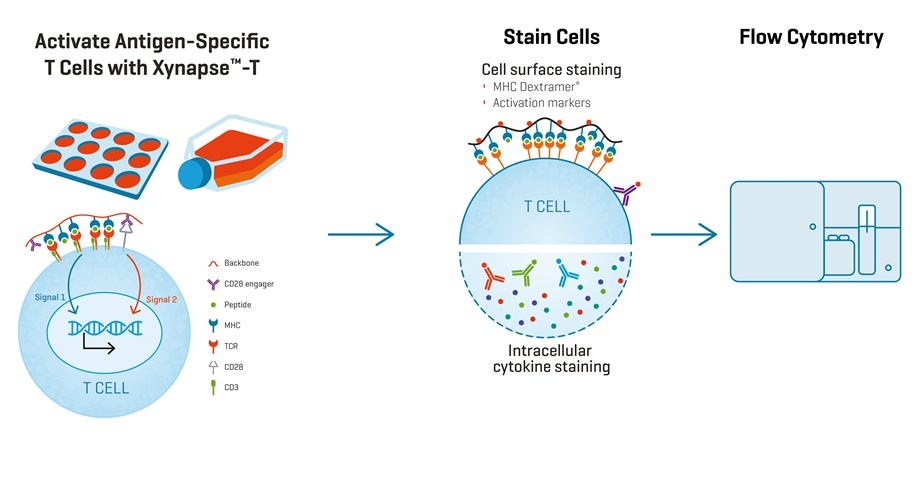
Figure 2. Xynapse™-T reagents can substitute for APCs and trigger T cell activation. Changes in antigen-specific T cell populations can be quantified by flow cytometry using MHC I/II Dextramer® reagents, alongside other activation markers.
A paramount safety consideration in CAR-T cell therapy is the undesired targeting of healthy tissues (on-target/off-tumor effects) or the unintended targeting of other antigens (off-target toxicities). The FDA mandates assessing the specificity and affinity of the antigen recognition domain for its intended target. The detection method must identify weak or sparse binding events, as even low-affinity or low-expression targets in healthy tissues could lead to adverse events if CAR-T cells bind to them. Elucidating off-target and off-tumor events early in preclinical development informs antigen choice and patient selection criteria for clinical trials.
Cui et al. made a first assessment of off-tumor expression of IL23R, the target of their CAR Treg product. They performed tissue cross-reactivity analyses with normal tissue sections and microarrays with 45 tissue types from healthy donors. They stained sections with a custom Dextramer® anti-IL23R antibody multimer and verified that healthy tissues did not contain IL23R.² While single antibodies may have sufficed, the potential for toxicity even at low-level CAR Treg activity in healthy tissue warranted the use of highly sensitive detection reagents. The multiple antibodies and fluorophores displayed on each Dextran backbone of a Dextramer® molecule boost the detection signal. With high avidity, Dextramer® reagents can detect low-affinity interactions that might be missed by other reagents.
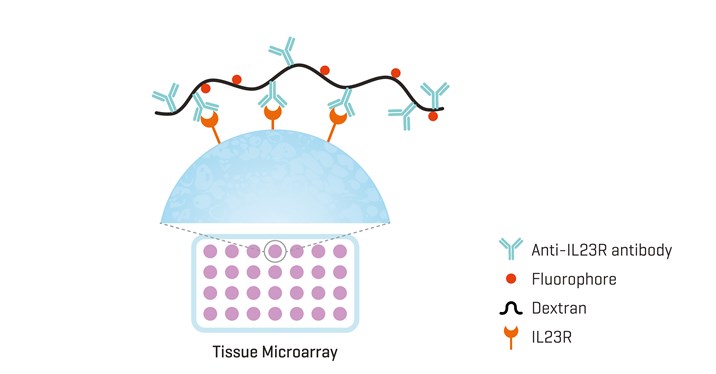
Figure 3. A custom Dextramer® anti-IL23R antibody multimer was used by Cui et al. to screen 45 tissue types from healthy donors for off-tumor expression of IL23R².
FDA guidelines clearly state the importance of a strategic, long-term perspective on CAR-T cell analytics, spanning the early establishment of quality control measures for each product through to monitoring these during manufacturing, at release, and over time in patients.
Immudex stands as a partner in this endeavor. Our reagents enable precise detection, comprehensive monitoring, and ultimately, compliance with regulatory requirements that call for a granular understanding of cell therapy products.
Carefully designed and manufactured to meet strict quality standards, our reagents address key FDA requirements for direct CAR detection, assessment of antigen binding specificity, and comprehensive T-cell characterization, including clonality and TCR repertoire analysis. Their robust consistency ensures that assay results are an unambiguous reflection of your product’s biological activity. Finally, our multimer reagents offer ways to streamline analytical workflows and condense quality control testing to the most compelling and informative assays.
Talk to our experts to see how Immudex reagents can support your CAR therapies.
We design and produce reagents for you, based on your specific targets.
